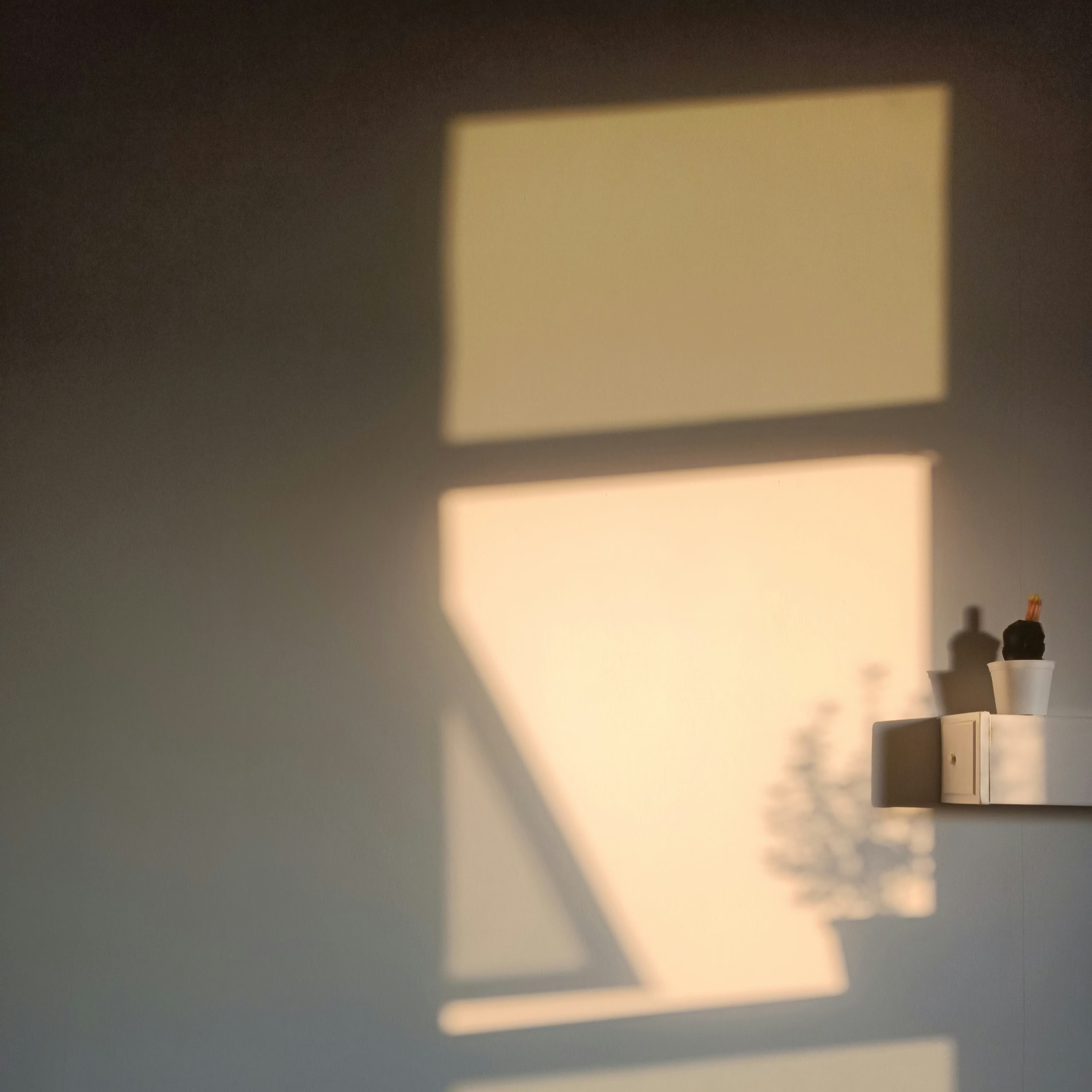
Honestly, the “what is the meaning of life” question is incredibly difficult to answer. Sometimes, I catch myself asking it too, quietly, in my own head, with no quick response ready.
I can’t give a neat, tidy definition of it. What I do instead is ask myself a different question: How can I make my life meaningful? How can I shape it into something that feels like my own answer?
The meaning of life looks different for everyone. It shifts depending on how a person sees the world, what they’ve been through, and what they choose to believe. For me, life is a gift from God, one that lets me become whoever I want to be, as long as I’m still breathing.
Have you heard of main character energy? I’ve been leaning into it lately, especially in my solitude, those quiet moments when I want to feel things and observe the world without involving anyone else. Because at the end of the day, this is my story. My journey. And I should be the one who gets to find the purpose that’s meant for me.
Getting to know myself better has been the most honest way I’ve found to make this life wonderful, even on the sad days, especially on the sad days.
Lately, though, I’ve been buried in work. I haven’t had time to read blog posts from people I follow, go to the gym, or even properly take care of myself. And life is trying to tell me something through that, teaching me to slow down and organize. I don’t have a proper system, and it’s been making me feel unproductive all day and completely drained by bedtime.
But I keep coming back to this:
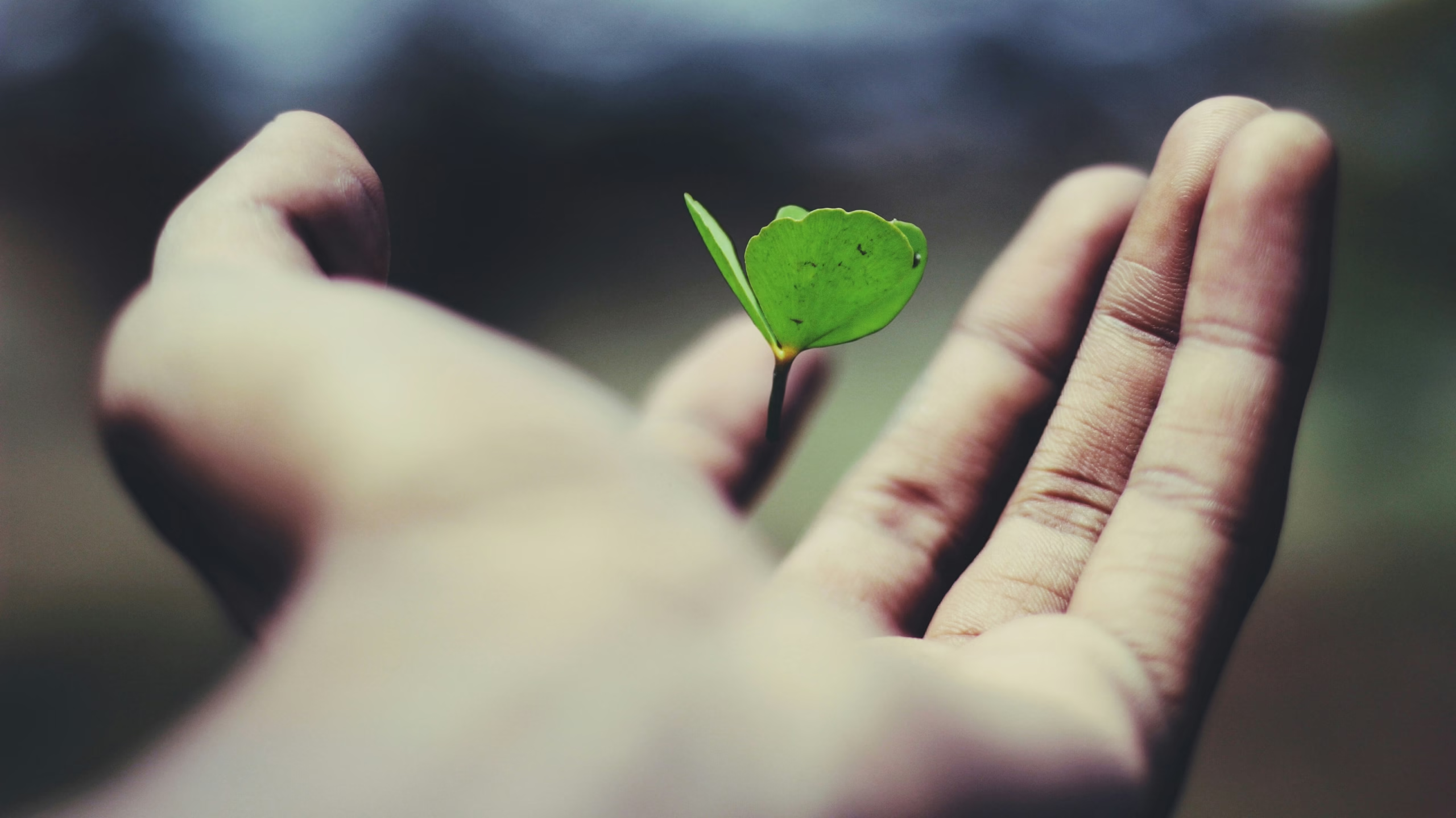
life, for me, is about figuring out how to keep going, with the people we love, despite all the unfairness and chaos the world throws at us. It’s about finding joy anyway and choosing to stay curious about your own story.
Too rich to receive help. Too poor to actually survive. That’s the middle class in a nutshell.
I woke up to hot weather today, debating whether to head to the coffee shop to work or stay home and make my own. Well, I stayed, and not just because of the budget. My dog is in her red days right now, so I couldn’t just leave her like that. 😅
So there I was, laptop open, scrolling through blog posts I’d been putting off reading because of work. And then I stumbled upon one that just hit different, the Dreams and Escapes blog post titled “Daily Life.“ There’s a part of it about the crisis we Filipinos are experiencing, aside from inflation, the crisis in oil and gas, and the government.
Something about it made me want to sit down and finally put into words what I’ve been feeling for a while now.
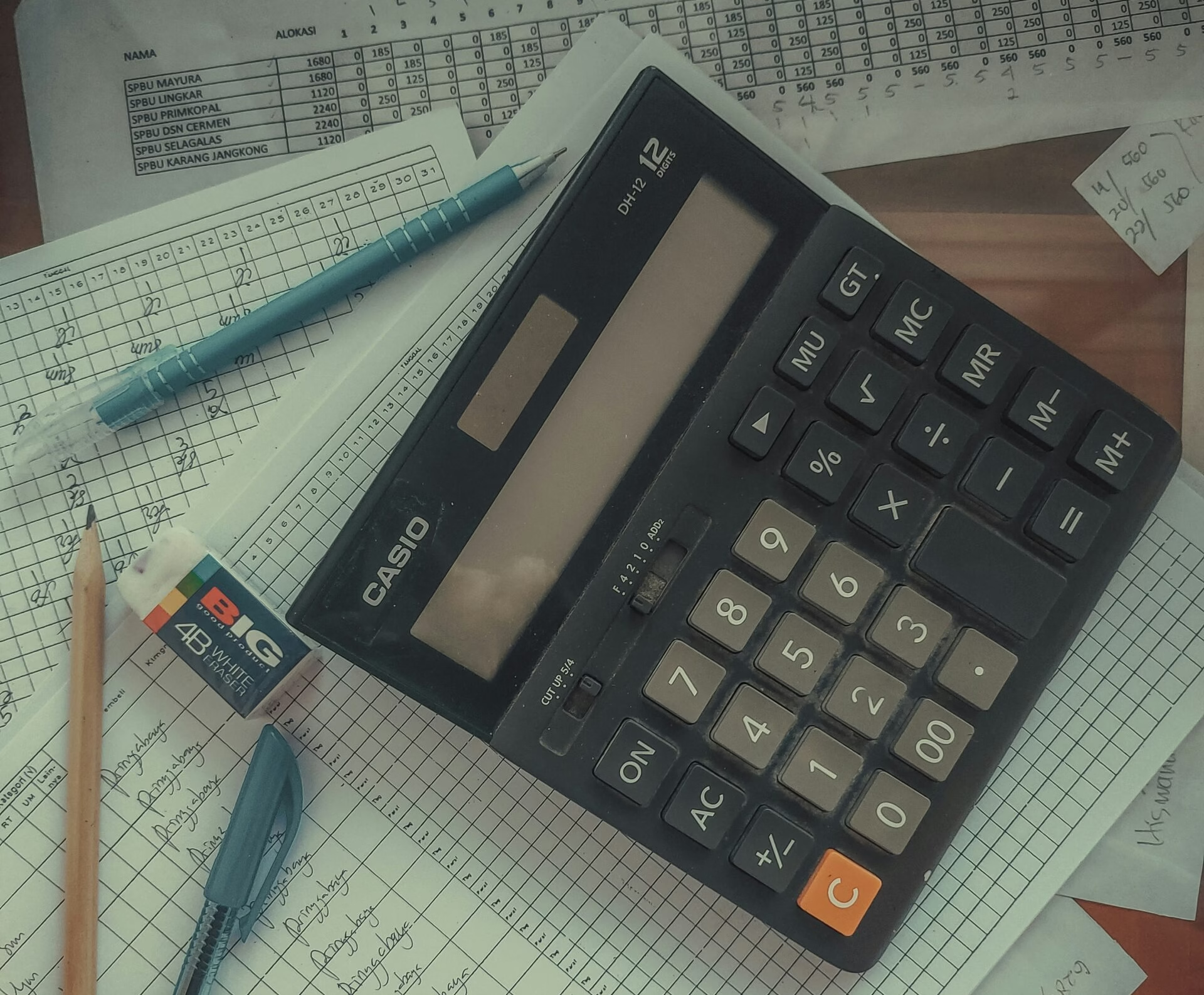
Every time I look at my payslip and see how much has been deducted in taxes, something in me sinks. (Oh noooooo, huhu that’s a lot!) Not because I don’t understand why we pay taxes. I do. It’s a responsibility, and I’ve accepted that. What I haven’t accepted is feeling completely invisible in return.
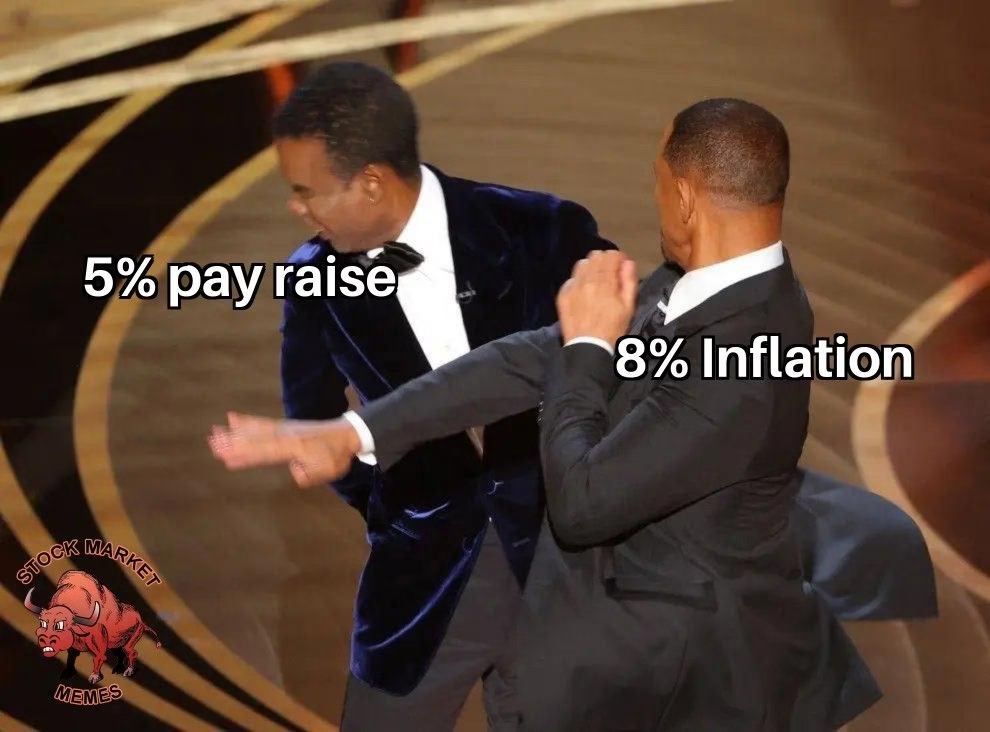
We don’t qualify for “ayuda” (Aid in English). We’re not on the low-income list. On paper, we’re doing “fine.” (Hindi nyo kailangan ng tulong “You don’t need help“) But fine doesn’t pay for groceries that cost 30% more than they did two years ago. Fine doesn’t cover the bills such as the electricity bill that is so high because of so many added extra charges! That keep climbing while our salaries stay flat. Fine doesn’t mean we’re not living paycheck to paycheck too, just quietly, without anyone noticing.
I’m not asking to be handed everything. I’m asking for better public services, infrastructure, healthcare, and opportunities for everyone. Anything that shows that the taxes taken from millions of working Filipinos actually went somewhere that benefits us too. Because right now? It doesn’t feel that way.
Why can’t some people get out of living paycheck to paycheck?
The people at the bottom struggle visibly, and they deserve support. But the middle class struggles silently, and that silence has been mistaken for comfort for far too long.
We work. We pay. We comply. And yet somehow, we’re always the ones who fall through the cracks of every program, every relief effort, every policy that claims to help “ordinary Filipinos.”
We are ordinary Filipinos too. It’s about time the system remembered that.
And it turns out, I’m not just imagining it. There’s actually a term for what we’re going through: economists call it the “new poor” phenomenon.
Final Thoughts
A lot of content creators on social media are sharing ways to earn extra income, invest, save, and become more financially stable, and honestly, that’s helpful. But it will always be case-by-case. Every individual has a different income, different bills, and different responsibilities that others may not see or understand.
Yes, we have more opportunities now than ever before, but with that comes a rat race that’s just as exhausting. It’s not easy, but it is fulfilling once you get there, and I won’t take that away from anyone who made it work.
I know nothing is impossible. But in the meantime, can we also give a little hope and acknowledgment to those who are already doing everything right, paying their taxes, juggling responsibilities, and simply trying to survive? Because for a lot of us, life isn’t a financial goal board right now. It’s just survival, one paycheck at a time.
I was in the living room, working on my laptop, with deadlines looming, eating sunflower seeds on the side, the way you do when you need something to do with your hands mid-task, when my relatives finally arrived for a small gathering.
I heard the knock, pushed my laptop aside, and went to the door to welcome them. My parents scrambled to prepare food the way Filipino parents always do, as if hosting were a reflex they were born with.
We did the whole greeting ritual, such as Beso-beso, or typically cheek-to-cheek, one side then the other. And then, mano po, it was when I reached for my uncle’s hand and pressed it gently to my forehead, the way we were taught to do since we were small. Respect. Warmth. Family.
Yes, I still live with my parents and my youngest brother. I work from home but sometimes visit Manila for in-person meetings or company events. Honestly, being here makes sense, since my parents aren’t getting any younger and showing up for them while I can feels like the most natural thing in the world. I do most of the household chores, like cleaning, laundry, and washing dishes.
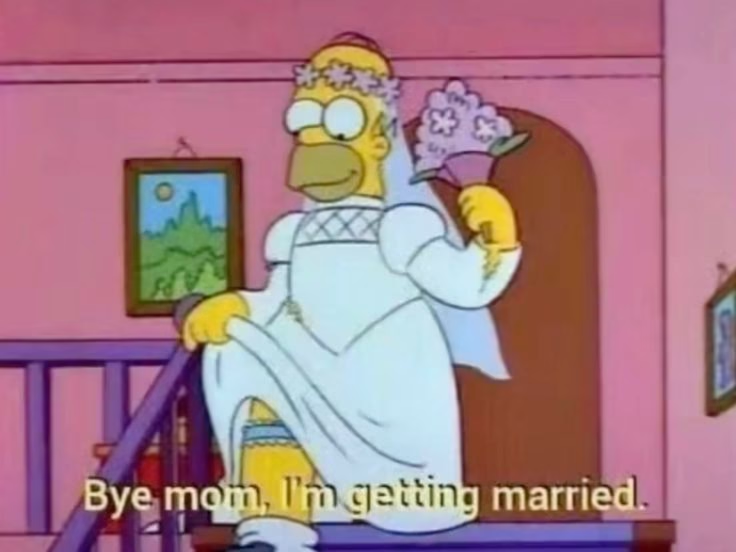
I do minimal cooking because I don’t consider myself a good cook. I love making salads, sandwiches, and tacos, and cooking my favorite Kare-Kare. My family enjoys what I cook. They always tell me, “Pwede ka na mag-asawa” in Filipino, meaning you can now get married, just because I know how to cook. I laugh when they bring it up because I think it’s pretty weird, but it’s common to Filipinos.
My older sister has her own place near her work, but she comes back every weekend without fail. We love being near each other. Every ordinary moment feels like something worth keeping.
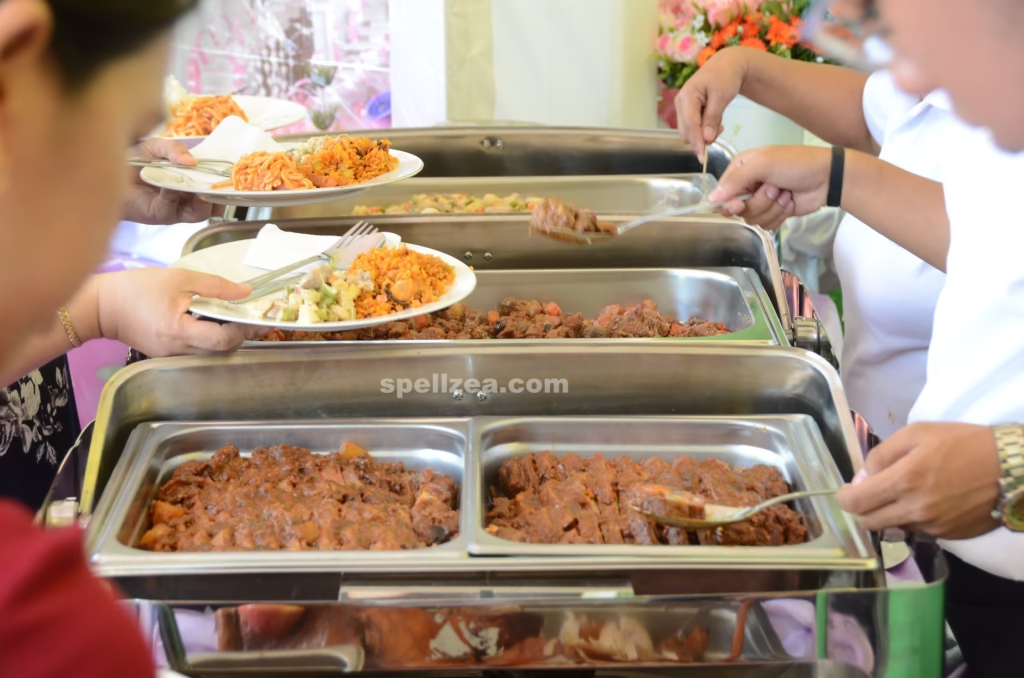
Small family gatherings in our house with foods that I enjoy 😊
The food is ready, and we usually do buffet-style, where you get your own plate and food. Some have already started getting their food, someone asked me.
“Kailan ka mag boboyfriend?” (When are you going have a boyfriend?)
“Kailan ka mag papakasal?” (When are you going to get married?)
“31 ka na, dapat mag ka anak ka na.” (You’re already 31, you should have a child by now.)
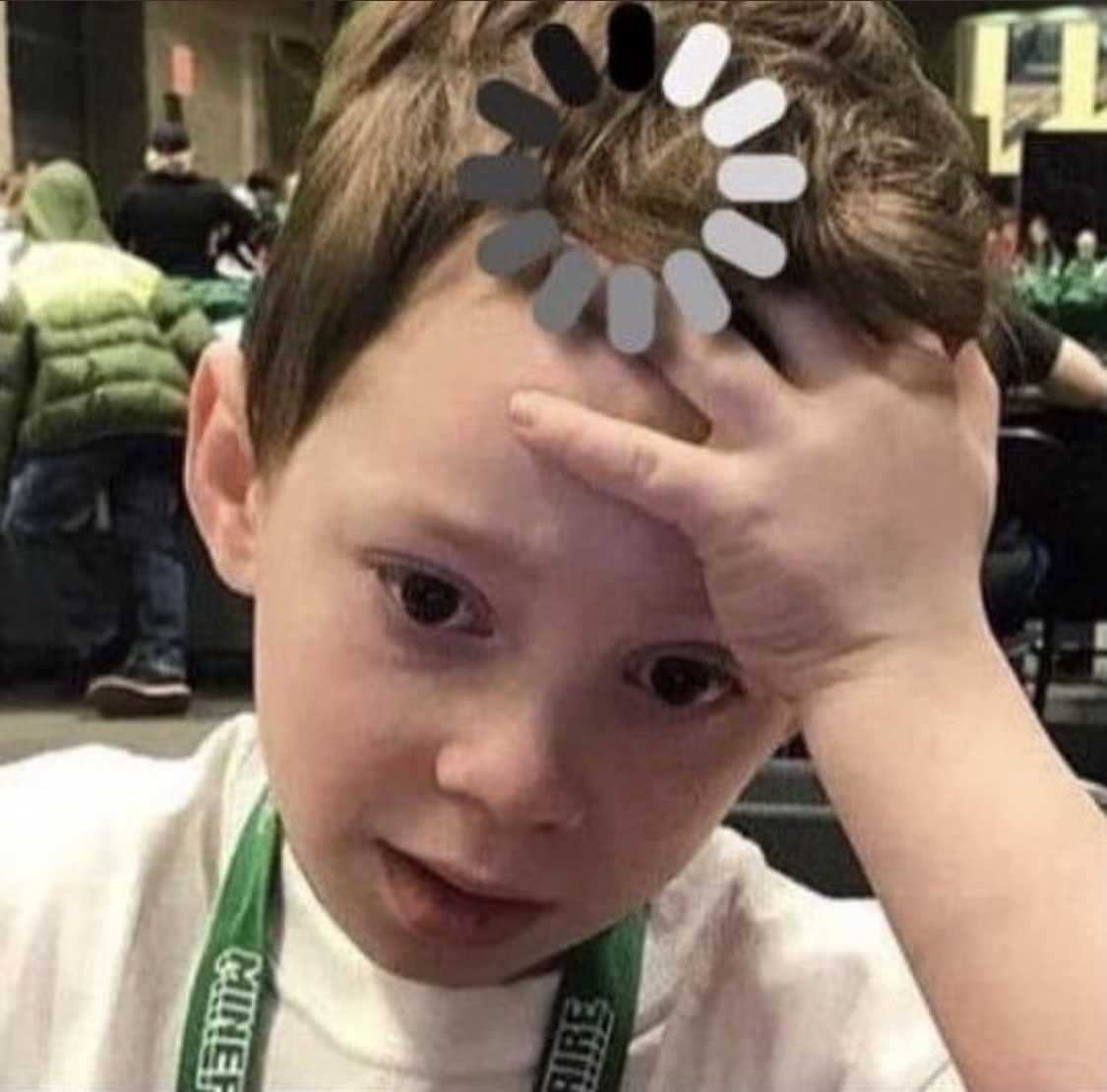
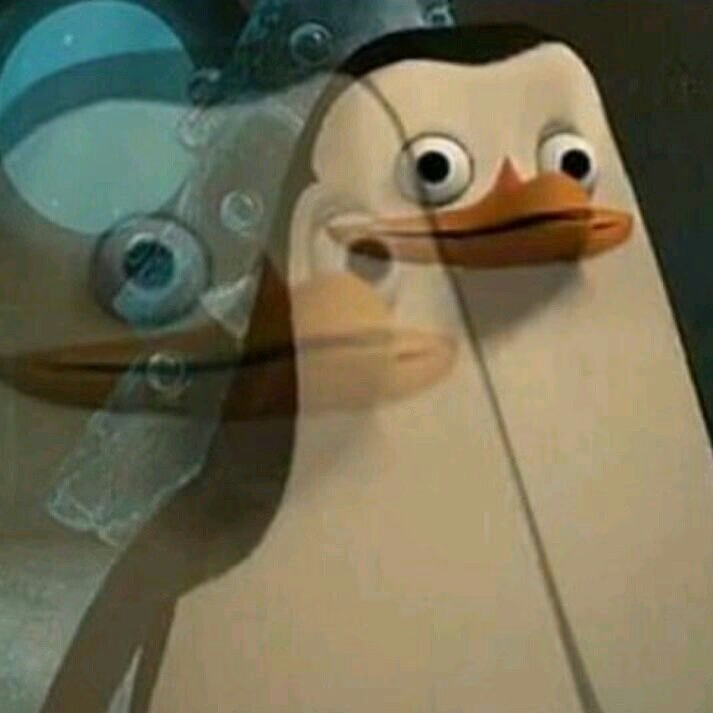
My exact facial expression that time lol. Image from Pinterest.
I freeze, I don’t know how to react, they are still my relatives and technically older than me, I should react with respect. So I just smiled and told them:
It didn’t cross my mind yet, I have a lot of things that I want to try and people to meet, and maybe if God chooses someone to be with me, I will surely meet that man at the right time, but for now, I don’t feel any pressure getting married or being with someone and building a family.
Where did this deadline even come from?
At every family gathering, both sides of my parents, I often encounter this question, and I know it’s not just me but other women who are enjoying their single life in their 30s.
Somewhere along the way, 30s became a deadline for women. Not for men, nobody corners my male cousins at reunions and asks them when they’re settling down. But for women, 30s is treated like an expiration date. Like, if you haven’t locked something in by then, you’ve missed your window.
I want to know who decided that because I don’t remember agreeing to it. 🙈
Being 31, single, and living with your parents is not a failure.
I am a whole, complete person without a husband. My life is not on pause. I am not waiting. I am living, working a career, taking care of the people I love, reading books that make me feel things, and figuring out who I am outside of what everyone else needs me to be.
And here’s the thing about still living at home that nobody wants to say out loud: it’s a choice I’m proud of. My parents are here, even though sometimes I feel differently, I still love them so much. My brother is here and about to graduate from his degree this year. My sister drives back every weekend because we can’t quite stand to be apart for too long. Why would I be in a rush to leave it for the wrong reason?
I’m not against marriage. I’m not bitter about it. If it happens, I want it to be because it’s right, not because I was afraid of what people would say if I showed up to another reunion still single at 32, 33, 34.
Final Thoughts
Maybe I am someone who values freedom. It says a lot in my astrology too, but at some point, I want to enjoy my single moment without pressure.
Life in the Philippines isn’t easy. I need to work for my family and for myself. Getting married is not a one-time big shot, and living with someone isn’t like randomly selecting based on preferences. But it doesn’t mean I closed my doors, I just want to be present and live with the people I cherish.
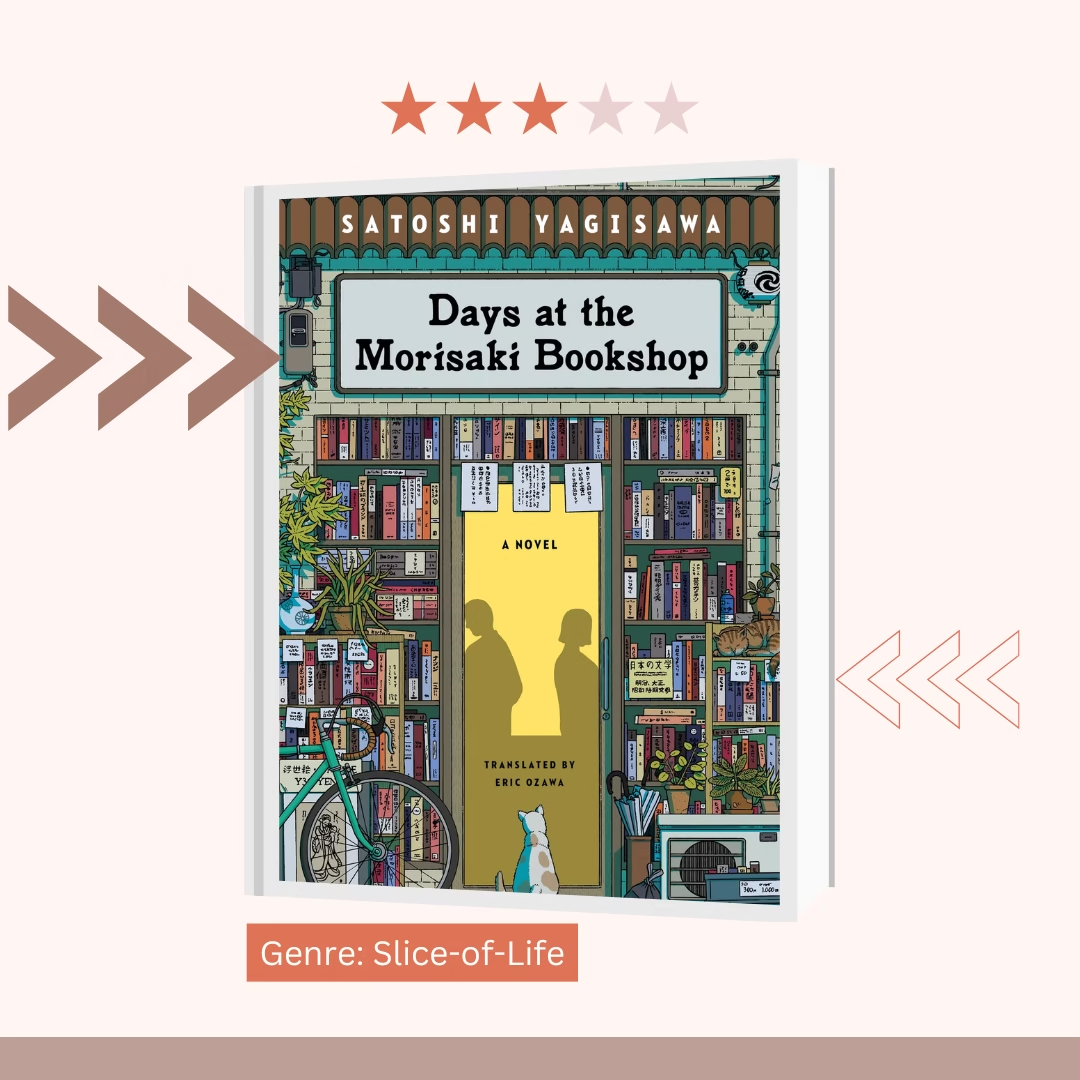
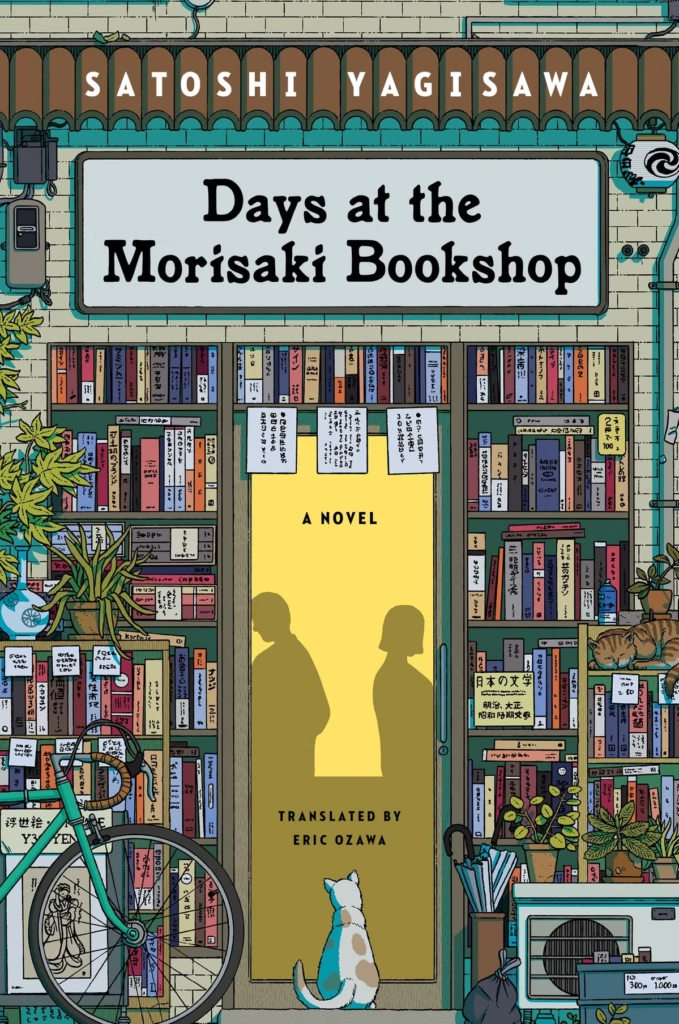
Days at the Morisaki Bookshop is a book about heartbreak, healing, and second-hand shelves that made me want to quit everything and open a bookshop.
I picked up this book not knowing what to expect, and I finished it in a single sitting, feeling slightly wistful, a little reflective, and, I’ll be honest, quietly Googling how much it costs to open a bookshop. That’s the best summary I can give.
Days at the Morisaki Bookshop is a short Japanese novel by Satoshi Yagisawa, translated into English by Eric Ozawa. It follows Takako, a 25-year-old woman whose life falls apart when she discovers her boyfriend plans to marry someone else. Heartbroken and unmoored, she accepts her eccentric uncle Satoru’s offer to stay above his second-hand bookshop in Jimbocho, Tokyo’s famous book town for a while. What follows is a slow, gentle story about what it means to start over.
It reads like a slow Sunday morning.
If you go into this book expecting dramatic plot twists or a fast-paced story, you’ll be disappointed. But if you go in looking for something that feels like slowing down, like sitting in a quiet room surrounded by old books while the world outside gets on with itself, this is exactly that.
There’s something deeply comforting about the Jimbocho setting. A whole district in Tokyo dedicated entirely to books and bookshops. Streets lined with shelves. People who wander in just to browse. Reading about it felt like a small escape. Uncle Satoru is my favorite character, disheveled, philosophical, a little ridiculous, but full of warmth. The kind of person who says something quietly profound while doing something completely undignified.
What I appreciated most is how the book handles healing. It doesn’t rush it. There’s no dramatic breakthrough moment. Takako just slowly, quietly starts to feel more like herself again, through books, through routine, through the small kindnesses of people around her. That felt real to me.
I’ll be transparent, there were moments where I felt like not much was happening. The second half of the book shifts focus to Takako’s aunt Momoko, and it loses a little of the bookshop magic that made the first half so cozy. The relationship threads are gentle but not particularly deep. Some things get resolved too quickly.
But here’s the thing: that’s the point. Life, when it’s healing, is slow. It doesn’t always have a neat arc. Sometimes you exist in a space for a while until you’re ready to leave it. The book captures that feeling better than almost anything I’ve read recently.
Read it when you need to breathe.
This isn’t a book you read for plot. You read it for atmosphere. For the feeling of being somewhere small and quiet and full of stories. For the reminder that healing doesn’t always look productive, sometimes it looks like sitting among books you haven’t read yet and letting yourself rest.
And I also genuinely want to open a bookshop now. A tiny one. With a room upstairs. If anyone wants to fund that dream, you know where to find me. 🌱
This site uses cookies. By continuing to use this website, you agree to their use. To find out more, including how to control cookies, see here:
Functional
Always active
The technical storage or access is strictly necessary for the legitimate purpose of enabling the use of a specific service explicitly requested by the subscriber or user, or for the sole purpose of carrying out the transmission of a communication over an electronic communications network.
Preferences
The technical storage or access is necessary for the legitimate purpose of storing preferences that are not requested by the subscriber or user.
Statistics
The technical storage or access that is used exclusively for statistical purposes.The technical storage or access that is used exclusively for anonymous statistical purposes. Without a subpoena, voluntary compliance on the part of your Internet Service Provider, or additional records from a third party, information stored or retrieved for this purpose alone cannot usually be used to identify you.
Marketing
The technical storage or access is required to create user profiles to send advertising, or to track the user on a website or across several websites for similar marketing purposes.